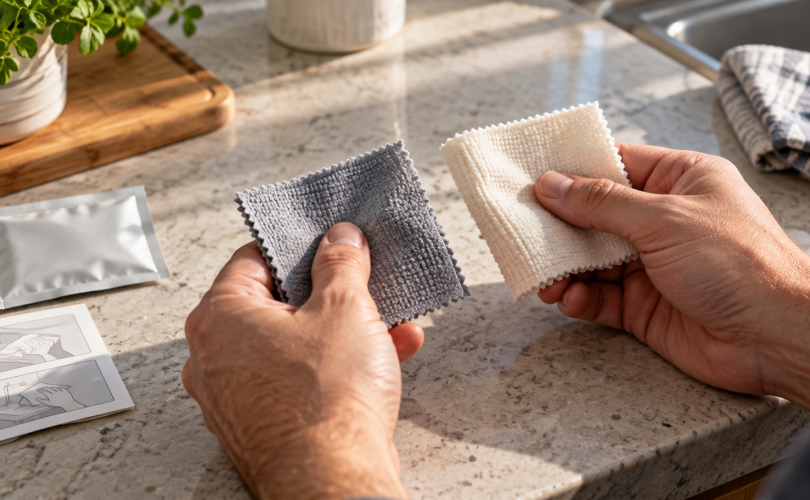
Before giving someone a product sample, agree on the question the sample can answer. It might help them judge taste, texture, convenience, or how an ordinary product fits their routine. It can’t, by itself, establish a health benefit or prove that a business opportunity works.
A sample with no question can leave both people guessing. The recipient thinks it was a gift. The seller thinks it was the beginning of a purchase. A week later, "How did you like it?" carries a sales expectation that was never discussed.
Keep the sample focused on that one question. You're helping a person learn something about a possible purchase, and their answer belongs to them.
Choose a question the person actually has
Start with what they want to find out. For a household item, that might be whether its size or handling suits a task. For a food product, it might be whether they like the taste, provided the product is appropriate for them and the label's directions and warnings are followed.
Don't invent a need to justify distributing the sample. If the person has no interest in the product's ordinary use, handing it over won't clarify customer demand. The person may just accept it to be polite.
The site's replacement test asks why someone would change from their current choice. A sample can examine one part of that decision. It doesn't answer the entire question of value, ongoing cost, or suitability.
Agree on the invitation before the handoff
A simple invitation might sound like this:
"You said you're curious about the texture. If the manufacturer's sample is suitable for you, would you like to try it using the included directions? There's no obligation to buy. If you'd like, we can check back next week about that one question."
Use only samples and handling methods permitted by the manufacturer. Keep instructions, ingredients, warnings, storage requirements, and expiry information available. Don't repackage a product in a way that removes information the recipient needs. If you can't provide an appropriate sample, offer current product information instead.
Show the normal purchase terms before someone mistakes a free trial for the ongoing arrangement. State whether anything must be returned and whether the sample is genuinely free. Never conceal an order, enrollment, or recurring payment behind the word "sample."
Listen for information, including an incomplete trial
At an agreed check-in, ask what the person could actually observe. "Did the size work for that task?" is more useful than "You're ready to order now, right?"
There are several legitimate answers. They may like the relevant feature. They may dislike it. They may discover a different concern. Or they may not have tried the sample at all.
Record the answer without improving it for the business. An unused sample is an incomplete observation, not product rejection and not evidence of demand. A pleasant texture is a preference, not proof of effectiveness. Keep those distinctions intact if you later discuss the feedback with your team.
For health products, personal impressions are especially easy to overread. The FTC's health-products guidance explains the need for adequate support for advertising claims. A sample response doesn't supply that substantiation, and you shouldn't interpret symptoms or suggest treatment. Questions of individual suitability belong with a qualified health professional.
Decide what the sample taught you
For your next small sampling effort, retain four notes: the person's question, what was supplied, the agreed contact, and the actual feedback. Include the cost to you so generosity doesn't disappear from your records, but don't turn the record into a quota the recipient must satisfy.
If the question was answered and the person wants buying information, provide it. If another question emerged, answer that before inviting a purchase. If the person declines or doesn't want further contact, stop.
That's the difference between education and a product pitch at sample size: the recipient leaves better informed, even when the sample never becomes a sale.