A product doesn’t earn a place in a customer's budget because it has a good story. It earns that place by doing a useful job well enough that the customer chooses it again.
That’s the replacement test: what’s the customer using now, and why would they replace it with this?
Network marketers often start with what makes a product special. Customers usually start somewhere else. They already have a routine, a brand, a homemade solution, or a decision to do nothing. Your product isn’t competing with an empty shelf. It’s competing with the customer's current answer.
Name the job before praising the product
Begin with one plain sentence: "This product helps a customer ________."
If the blank requires a long scientific explanation, a compensation-plan detour, or a vague phrase such as "live your best life," you haven’t clearly explained what the product helps someone do yet.
The job might be convenience, nutrition support, household care, personal care, or another ordinary need. Keep the description inside what the current label and reliable evidence support. A broad biological fact doesn’t prove a specific product result, as I explained in how to evaluate glycan supplement claims.
Compare the whole decision
Customers don’t compare price alone. They compare the whole experience:
- the outcome they expect;
- the total cost per use;
- convenience and availability;
- ingredients, instructions, and warnings;
- trust in the seller and manufacturer;
- return or cancellation friction; and
- whether the product fits a routine they can maintain.
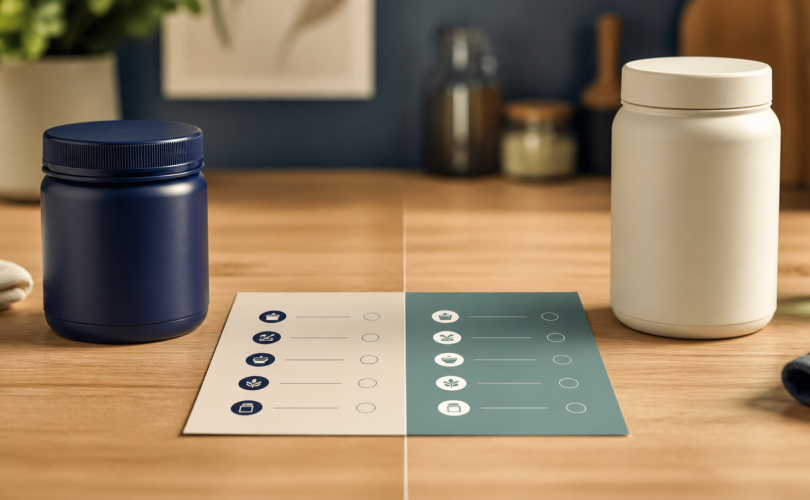
Create a simple two-column comparison between the product and the customer's current choice. Use facts you can verify. If you don’t know an answer, mark it unknown instead of filling the space with confidence.
Then ask the customer which difference actually matters to them. Your favorite feature may not be their reason to change.
Watch the second purchase
The first purchase can come from curiosity, friendship, or a good presentation. The second purchase tells you more.
Did the customer use the product? Did it fit the routine? Was the price acceptable after the excitement was gone? Did they reorder without being chased? If not, why not?
Do not treat every lost reorder as an objection to overcome. Sometimes the product wasn’t a good fit. A truthful "this may not be for you" protects the relationship and gives you better business information.
Use a 30-day replacement review
Choose five customers who agreed to give direct feedback. At the end of 30 days, ask:
- What were you using before?
- What changed after trying this product?
- What did not work as expected?
- Would you buy it again at the normal price?
- Who should not buy it?
The last question keeps product education honest. Every useful product still has limits, conditions, or people for whom it isn’t the right choice.
Make the business decision
If customers can name the job, the meaningful difference, and a reason to reorder, strengthen that customer path. Teach the team to explain the product in the same plain language.
If customers cannot identify a practical replacement reason, do not solve the problem with a bigger opportunity pitch. Revisit the market, the price, the explanation, or the product fit.
A product-centered business is not built by making the product sound extraordinary. It is built by helping the right customer make an ordinary, sensible buying decision.