I joined network marketing for a reason that made sense to me at the time: I wanted another way to live.
That is harder to admit than the explanations people usually give after things go wrong. It is easier to say I was misled, or that I trusted the wrong person, or that I did not understand the compensation plan. Some of that may be true, but it is not the whole truth. The opportunity reached me because it seemed to answer something I was already feeling.
My life felt too settled in all the wrong ways. I could see the schedule, the financial ceiling, and the years ahead of me, and I did not like the picture. Then network marketing showed up talking about freedom, ownership, and building something of my own. Of course I listened.
That did not make me stupid. It made me reachable.
What the promise was really selling
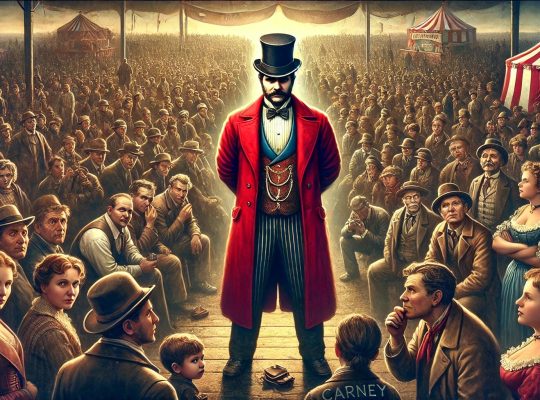
For generations, "running off to join the circus" meant leaving a life somebody else had already planned for you. The circus looked dangerous and uncertain, but it also looked alive. From outside the tent, uncertainty could pass for freedom.
Network marketing can create the same feeling. The first presentation may include products and a compensation plan, but the emotional promise is usually much larger. You are shown a different use of your time, a different relationship with money, and a community of people who seem to understand why an ordinary life no longer feels good enough.
When you are already tired of your job or worried about your future, that message does not have to be dishonest to be powerful. It only has to arrive at the right moment.
This is why I do not laugh at people who join. Most are not chasing a cartoon version of wealth. They want room to breathe. They want to believe their effort can build toward something they own. They may also want recognition, belonging, or proof that the next ten years do not have to look like the last ten.
Those are real wants. The mistake is assuming that an opportunity must be sound because it speaks to them.
The part I had to own
Once I understood what had drawn me in, I could ask better questions about the business itself.
I had spent too much time measuring my enthusiasm and not enough time examining the method. I wanted the promise to be true, so every doubt felt like a test of my commitment. When an opportunity becomes part of your identity, ordinary business questions can start to feel disloyal.
But a business should be able to survive ordinary questions.
Where does customer demand come from? Would people buy the product if no opportunity were attached? What does it cost to remain active? Can a new person learn the work without becoming a full-time content creator, motivational speaker, or professional prospector? If the answer to every weak result is "work harder" or "fix your mindset," what part of the system is ever allowed to be examined?
Hard work still matters. So do patience, skill, and personal responsibility. I simply no longer believe those things should be used to protect a poor method from inspection.
What I look for now
I still believe network marketing can be approached as a legitimate, product-centered business. I am not interested in replacing one blanket story with another. But the business has to work beneath the performance.
I look for products customers understand and choose to buy again. I look for costs that can be stated plainly, expectations that do not require fantasy, and training that helps ordinary people become more capable over time. I want a method that respects a "no" and does not require every personal relationship to become a prospecting opportunity.
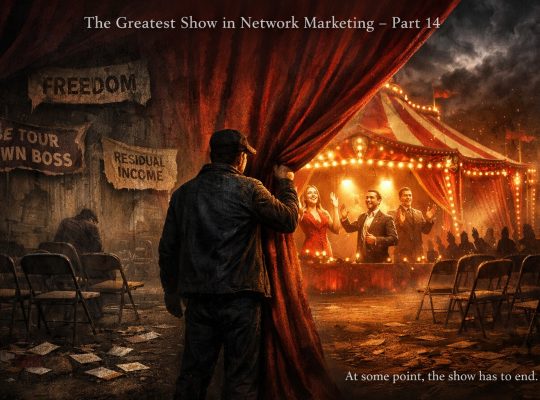
That is also the larger concern behind The Greatest Show in Network Marketing. The performance becomes dangerous when it keeps everyone applauding long enough to avoid inspecting the business underneath it.
I can remember why I walked into the tent without pretending the tent was safe. In fact, understanding the attraction is what finally made honest inspection possible.