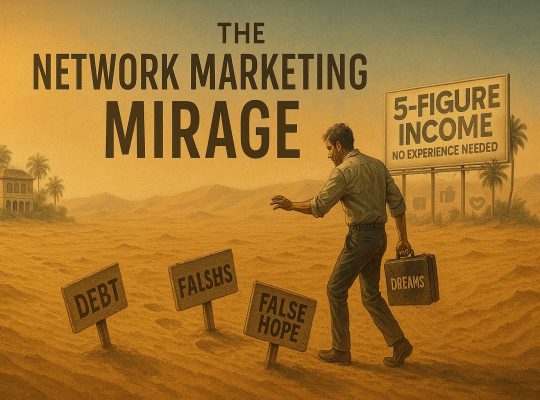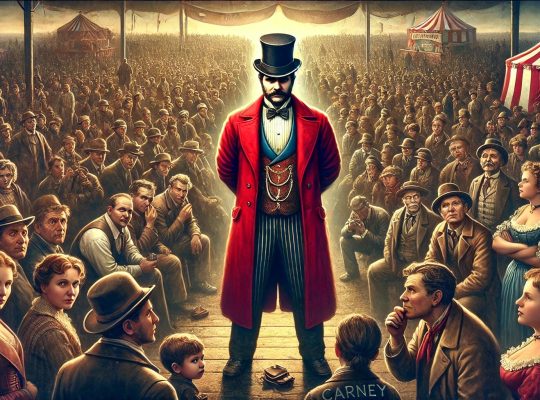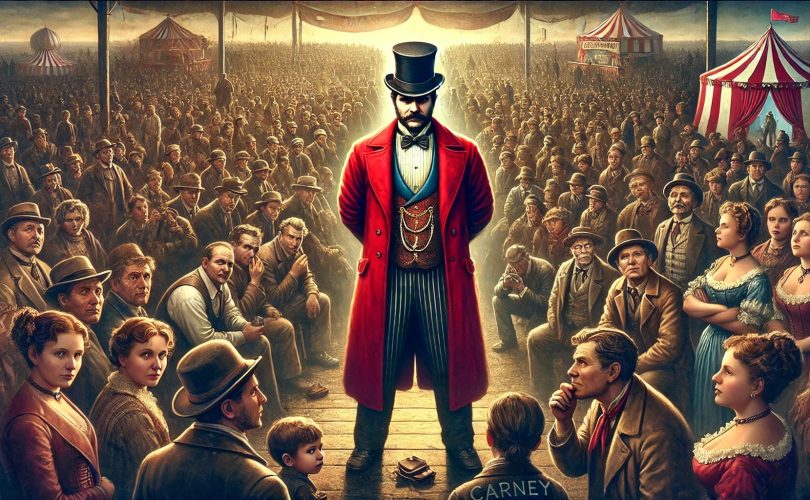
Why Spectators Are the Point (And Why the Industry Misses It)
The MLM industry treats spectators like a problem.
They aren’t.
They are the majority — and they always will be.
The mistake wasn’t building a model that allows leverage.
The mistake was pretending everyone should play the same role inside it.
Professional sports don’t collapse because most people don’t play.
They function because roles are clear.
Players play.
Coaches coach.
Owners own.
Fans fund the system by participating at a level that fits their lives.
No one yells at fans for not training like professionals.
Only MLM does that.
And it does it because confusion sustains the circus.
The industry tells spectators they’re failures unless they become performers — while quietly relying on their purchasing behavior to keep the entire structure alive.
That contradiction is intentional.
Here’s the reality the stages avoid:
Most people want utility, not opportunity.
They want access to products, services, pricing advantages, and modest upside — without identity overhaul or lifestyle sacrifice.
They don’t want to recruit.
They don’t want to present.
They don’t want to “build a brand.”
And forcing them to pretend they do is where the damage starts.
This is where my system breaks with the prevailing paradigm.
I do not recruit spectators and shame them for staying seated.
I design for them.
A real leveraged model must accommodate non-performers by default, not as an embarrassment.
That’s why the four-hours-a-week constraint matters.
It’s not a marketing claim.
It’s a structural filter.
Any system that only works when people behave unnaturally — posting daily, recruiting aggressively, staying emotionally “on,” sacrificing family time — is not duplicatable. It’s coercive.
The circus survives by convincing spectators they should be something else.
A real business survives by letting people be what they already are.
This is the missing category in MLM thinking:
Not consumers.
Not recruiters.
But participants with jurisdictional limits.
People who opt in without surrendering their lives.
People who are not lazy — just sane.
When you stop demanding that spectators become performers, three things happen:
-
Pressure disappears
-
Manipulation loses its leverage
-
Scale becomes ethical again
The irony is this:
the industry’s obsession with “super recruiters” actually shrinks the pool.
It repels normal people.
It rewards pathology.
It burns out leaders.
And then it calls the outcome “attrition.”
I don’t need super recruiters.
I need a model that works for people who will never be on a stage — and never wanted to be.
That’s not lowering standards.
That’s designing for reality.
The circus collapses when spectators are no longer shamed.
The model finally works when they’re respected.
The greatest show isn’t in the spotlight — it’s happening around you.
If you’re done being stimulated, motivated, and harvested by modern hustlers and digital ringmasters, this body of work exists for one reason:
To return you to sanity.
To structure.
To something that actually holds under weight.
No hype.
No drama.
No performance.
Just clarity — and the ability to finally feel the hands in your pockets before they empty them.
When you’re ready to stop watching and start building:
Copyright © 2026 MJ Enterprises
All rights reserved.